

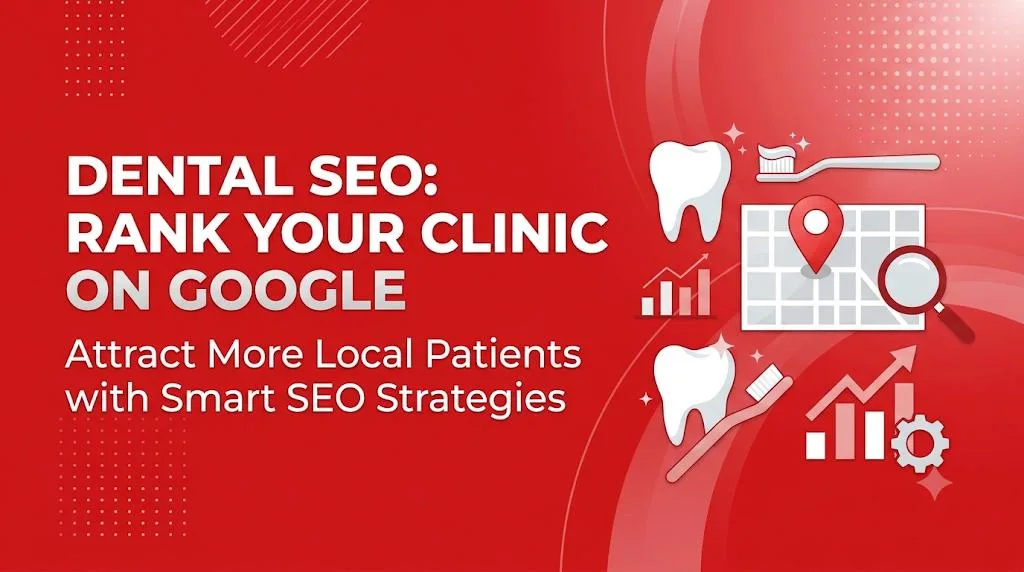
Dental SEO: How to Rank a Dental Clinic on Google and Attract More Patients
When someone searches Google for a dentist, dental implants, teeth whitening, or a dental clinic near their location, they usually want to find a suitable practice, explore treatment options, and book an appointment.
For dental clinics, appearing prominently in these searches can create valuable opportunities to reach people actively looking for dental services.
However, having a website alone does not guarantee visibility. Your dental practice needs a well-planned search engine optimization strategy that helps Google understand your services, location, website content, and business information.
Dental SEO is the process of improving a dental clinic’s online visibility in organic search results and local search listings. It includes dental keyword research, website optimization, Google Business Profile management, local SEO, patient-focused content, technical improvements, and online reputation management.
Whether you operate a single-location dental clinic, a multi-specialty dental centre, or a dental implant practice, a structured SEO strategy can help potential patients discover your services when they search online.
In this guide, we explain how dental SEO works, how to improve your Google rankings, which keywords to target, how to optimize your Google Business Profile, and how to convert relevant website visitors into appointment enquiries.
What Is Dental SEO?
Dental SEO refers to search engine optimization strategies specifically developed for dentists, dental clinics, orthodontists, cosmetic dentists, and other oral healthcare providers.
The objective is to make your dental website and business information more visible when people search for relevant dental services.
For example, a dental clinic in South Delhi may want to appear for searches such as:
- Dentist in South Delhi
- Dental clinic near me
- Best dentist in Safdarjung Enclave
- Dental implants in Delhi
- Root canal treatment near me
- Teeth whitening clinic in Delhi
- Cosmetic dentist in South Delhi
Dental SEO focuses on several important areas:
- Keyword research: Identifying what potential patients search for.
- On-page SEO: Optimizing dental service pages, titles, headings, and website content.
- Local SEO: Improving visibility for location-based dental searches.
- Google Business Profile: Managing accurate clinic information on Google Search and Maps.
- Technical SEO: Improving website crawling, indexing, speed, and mobile usability.
- Content marketing: Publishing useful dental information and educational articles.
- Reputation management: Encouraging genuine patient feedback and maintaining a professional online presence.
- GEO and AI search optimization: Making dental information clear, structured, and understandable for AI-assisted search experiences.
A successful dental SEO campaign combines these activities rather than relying on keyword placement alone.
Why Is SEO Important for Dental Clinics?
People frequently use search engines to find dentists, compare clinics, research dental procedures, and check appointment information.
If your practice does not appear for relevant searches, potential patients may discover other dental providers instead.
Here are some reasons why dental SEO is important.
1. Help More Patients Discover Your Dental Clinic
Patients may search for a dentist based on their location, a particular dental problem, or a treatment they are considering.
A well-optimized website can help your practice appear for relevant searches.
For example, a dental clinic offering implant dentistry may target searches such as:
- Dental implant clinic in Delhi
- Dental implant consultation near me
- Full mouth dental implants in Delhi
- Tooth replacement treatment in South Delhi
These searches indicate a more specific interest than a general search for dental information.
2. Improve Google Maps Visibility
Google Maps is an important discovery channel for people looking for nearby dental clinics.
A complete and accurate Google Business Profile can display:
- Dental clinic name
- Address and directions
- Phone number
- Website
- Opening hours
- Photographs
- Patient reviews
- Available services
Google explains that local results are primarily influenced by relevance, distance, and prominence. Improving the accuracy and completeness of your business information can help Google understand your practice and match it with relevant searches. https://support.google.com/business/answer/7091
3. Build Trust Before a Dental Appointment
Patients may want to learn about a dentist’s qualifications, experience, available treatments, clinic environment, and consultation process before booking.
Your website should provide clear and accurate information about:
- Dentists and specialists
- Professional qualifications
- Dental treatments
- Clinic facilities
- Appointment procedures
- Contact details
Helpful information can make it easier for prospective patients to evaluate your practice.
4. Generate More Relevant Appointment Enquiries
SEO can bring visitors who are already searching for dental services.
For example, someone searching for “dental implants in Delhi” may be researching clinics that provide implant consultations.
A dedicated dental implant page with clear service information and an accessible appointment option can help turn relevant visitors into enquiries.
5. Build Long-Term Organic Visibility
Paid advertising can generate traffic while campaigns are active. SEO focuses on improving your website’s visibility through organic search.
Although SEO requires ongoing investment and does not guarantee rankings, useful content, technical improvements, and a credible online presence can support long-term discoverability.
1. Conduct Dental Keyword Research Before Starting SEO
Keyword research is the foundation of a dental SEO strategy.
Before optimizing your website, identify the terms potential patients use when searching for dental services.
A good keyword strategy should consider:
- Dental specialty
- Treatment type
- Search intent
- City and neighbourhood
- Competition
- Relevance to your actual services
Types of Keywords Dental Clinics Should Target
| Keyword Category | Example Keywords |
|---|---|
| General dental keywords | Dentist, dental clinic, dental hospital |
| Local keywords | Dentist in Delhi, dental clinic in Gurgaon |
| Treatment keywords | Dental implants, root canal treatment |
| Cosmetic dentistry | Teeth whitening, smile makeover |
| Orthodontics | Braces treatment, clear aligners |
| Emergency dental | Emergency dentist near me |
| Informational | How to choose a dentist, dental implant consultation |
Dental Keyword Examples by Specialty
General Dentistry
- General dentist in Delhi
- Dental check-up clinic near me
- Family dental clinic in Gurgaon
Dental Implants
- Dental implants in Delhi
- Dental implant specialist near me
- Full mouth dental implants consultation
Cosmetic Dentistry
- Cosmetic dentist in Delhi
- Teeth whitening clinic near me
- Smile makeover consultation
Orthodontics
- Orthodontist in Gurgaon
- Braces treatment in Delhi
- Clear aligners consultation
Endodontics
- Root canal specialist in Delhi
- Root canal treatment near me
- Endodontic clinic
These are keyword ideas, not verified search-volume figures. Use keyword research tools to evaluate demand and competition in your target market.
Map Keywords to the Correct Website Pages
Do not target every dental keyword on your homepage.
Instead, create dedicated pages for important treatments and services.
| Website Page | Suggested Primary Keyword |
|---|---|
| Homepage | Dental clinic in [City] |
| Dental implants | Dental implants in [City] |
| Root canal | Root canal treatment in [City] |
| Teeth whitening | Teeth whitening in [City] |
| Orthodontics | Orthodontist in [City] |
| Cosmetic dentistry | Cosmetic dentist in [City] |
| Contact page | Dental clinic address and location |
This approach helps search engines understand the purpose of each page and gives visitors more relevant information.
2. Optimize Your Google Business Profile for Dental SEO
Google Business Profile is one of the most important elements of local SEO for dentists.
It allows eligible dental practices to manage their business information across Google Search and Google Maps.
Start by claiming and verifying your dental clinic’s profile.
Complete Your Dental Business Information
Make sure the profile includes:
- Real dental clinic name
- Correct primary business category
- Relevant additional categories
- Accurate address
- Working phone number
- Official website URL
- Current opening hours
- Appointment information
- Available dental services
- Genuine clinic photographs
Choose categories that accurately represent your practice. Avoid adding unrelated categories or unnecessary keywords to your business name.
Add Genuine Dental Clinic Photographs
Photographs can help prospective patients understand the environment and facilities of your practice.
Consider adding:
- Clinic exterior
- Reception area
- Waiting area
- Dental consultation room
- Treatment facilities
- Dental equipment
- Team photographs, with appropriate consent
Use genuine photographs rather than unrelated stock images presented as actual clinic facilities.
Keep Your Google Business Profile Updated
Review your business profile regularly.
Update opening hours, contact details, appointment information, and photographs when necessary.
For additional guidance, refer to Google’s official local ranking recommendations.
3. Create Dedicated Dental Treatment Pages
One of the most important dental SEO recommendations is to create useful pages for the treatments your clinic actually provides.
A single page listing every dental treatment may not adequately answer the questions patients have about individual procedures.
Essential Pages for a Dental Website
Depending on the services offered, consider creating:
- Dental implants
- Full mouth rehabilitation
- Root canal treatment
- Teeth whitening
- Cosmetic dentistry
- Orthodontic treatment
- Clear aligners
- Dental crowns and bridges
- Pediatric dentistry
- Gum treatment
- Wisdom tooth removal
- General dental consultation
What Should a Dental Service Page Include?
Each page should provide useful and accurate information.
For example, a dental implant page may include:
Introduction: Explain the dental service and the purpose of the page.
Treatment overview: Describe dental implants in understandable language.
Who may benefit: Explain general suitability without promising that a particular visitor is eligible.
Consultation process: Describe what a patient may expect during an initial consultation.
Dentist information: Identify the professionals responsible for providing the service and include verified qualifications.
Frequently asked questions: Answer relevant questions using accurate information.
Appointment CTA: Make it easy to request a consultation.
Avoid copying the same content across multiple treatment pages. Each page should address its own topic and provide genuinely useful information.
4. Build Location-Specific Dental Landing Pages
Local search is particularly important for dental practices because many patients prefer clinics that are convenient to reach.
If your dental practice operates in multiple genuine locations, create separate pages that provide useful information about each branch.
For example:
- Dental clinic in Safdarjung Enclave
- Dental clinic in Sushant Lok, Gurgaon
- Dental clinic in Gulmohar Park
A useful location page should include:
- Correct clinic address
- Dentist and specialist information
- Treatments available at that location
- Clinic photographs
- Opening hours
- Directions and map
- Appointment information
- Relevant FAQs
Do not create large numbers of nearly identical pages just by replacing neighbourhood names. Each page must reflect a real location and provide useful, accurate local information.
Example of a Location Page SEO Structure
H1: Dental Clinic in Safdarjung Enclave, Delhi
Suggested sections:
- About the dental clinic
- Dentists and specialties
- Dental treatments available
- Clinic facilities
- Location and directions
- Appointment booking
- Frequently asked questions
This structure helps visitors understand what the practice offers and where it is located.
5. Improve Dental Website On-Page SEO
Your website should make it easy for search engines and visitors to understand your services.
Review these important on-page SEO elements.
Optimize Page Titles
Each important page should have a unique title that accurately describes its content.
Examples:
- Dental Clinic in Delhi | Clinic Name
- Dental Implants in Delhi | Clinic Name
- Cosmetic Dentist in Gurgaon | Clinic Name
- Root Canal Treatment in Delhi | Clinic Name
Avoid repeating the same title across every page.
Write Useful Meta Descriptions
Meta descriptions should summarize the page and encourage relevant users to visit it.
Example:
“Explore dental implant consultations at our Delhi dental clinic. Learn about available services, meet our dental team, and request an appointment.”
Use Descriptive Headings
Organize your page with one clear H1 and descriptive H2 and H3 headings.
Example:
- H1: Dental Implants in Delhi
- H2: What Are Dental Implants?
- H2: Understanding the Dental Implant Consultation
- H2: Meet Our Dental Team
- H2: Frequently Asked Questions
Optimize Dental Images
Use relevant images and optimize them for performance.
Recommended practices:
- Use descriptive filenames.
- Compress images without visibly reducing quality.
- Use modern formats such as WebP where supported.
- Add meaningful alt text.
- Specify image dimensions to reduce layout shifts.
- Use genuine clinic images where appropriate.
Example filename:
dental-implant-consultation-delhi.webp
Example alt text:
“Dentist discussing dental implant treatment options with a patient during a consultation.”
Alt text should describe the actual image rather than repeat keywords unnecessarily.
6. Publish Helpful Dental Blogs and Educational Content
Content marketing can help your dental practice answer questions people commonly ask before choosing a dentist or considering a treatment.
A well-planned dental blog strategy should address informational search intent and link readers to relevant service pages.
Dental Blog Topics to Consider
Dental Implants
- What to Know Before Choosing Dental Implants
- Questions to Ask During a Dental Implant Consultation
- Understanding Dental Implant Treatment Planning
General Dentistry
- Why Regular Dental Check-ups Matter
- How to Choose a Dental Clinic in Your City
- Questions to Ask Your Dentist During Your First Visit
Cosmetic Dentistry
- What to Discuss Before Teeth Whitening
- Understanding Cosmetic Dentistry Consultations
- How to Evaluate a Smile Makeover Treatment Plan
Orthodontics
- Braces vs Clear Aligners: What Should Patients Discuss With an Orthodontist?
- Questions to Ask Before Starting Orthodontic Treatment
- Understanding the Orthodontic Consultation Process
Pediatric Dentistry
- Preparing a Child for Their First Dental Visit
- Questions Parents Can Ask a Pediatric Dentist
- Building Healthy Oral Hygiene Habits in Children
Follow Healthcare Content Quality Guidelines
Dental articles should provide accurate information and avoid unsupported clinical claims.
Where clinical topics are discussed:
- Identify the author.
- Use qualified dental reviewers where appropriate.
- Cite reputable dental and medical references.
- Keep treatment information current.
- Avoid guaranteeing treatment outcomes.
- Distinguish general education from individual dental advice.
Useful dental references include:
- American Dental Association
- FDI World Dental Federation
- National Institute of Dental and Craniofacial Research
- CDC Oral Health
- PubMed
These resources can support the accuracy of dental educational content. They should not be used to manufacture endorsements or imply that an association recommends your clinic.
7. Encourage Genuine Patient Reviews and Build Your Online Reputation
Patients may look at reviews when comparing dental clinics.
Genuine patient feedback can help prospective patients understand other people’s experiences with your practice.
Develop a consistent and ethical process for requesting reviews.
Best Practices for Dental Patient Reviews
- Invite patients to share honest feedback.
- Make the review process convenient.
- Do not pressure patients to leave positive reviews.
- Do not offer incentives for reviews.
- Do not selectively request reviews only from satisfied patients.
- Respond professionally to feedback.
- Protect patient privacy in every public response.
How to Respond to Dental Reviews
For positive feedback, acknowledge the person’s comments politely.
For negative feedback, avoid confirming that the reviewer is a patient or discussing appointments, diagnoses, treatment, or personal information.
Invite the person to contact the practice privately if appropriate.
Reviews should be genuine. Never purchase reviews, create fake patient accounts, or ask people to include specific keywords in their feedback.
8. Improve Dental Website Speed and Mobile Experience
Many people use mobile devices when looking for a nearby dentist.
If your website is difficult to use, visitors may leave before finding the information they need.
A mobile-friendly dental website should provide:
- Easy-to-read text
- Simple navigation
- Fast-loading images
- Clickable phone numbers
- Clear appointment buttons
- Accessible contact forms
- Correct clinic location details
- Easy-to-find treatment information
Technical SEO Checklist for Dental Websites
Review the following:
- HTTPS security
- Mobile responsiveness
- XML sitemap
- Robots.txt configuration
- Canonical tags
- Broken links and redirects
- Core Web Vitals
- Image optimization
- Internal linking
- Crawlability and indexability
Google’s SEO Starter Guide provides useful guidance on creating search-friendly websites.
For more information about the general concept of search engine optimization, see Search engine optimization on Wikipedia.
9. Use Dental Structured Data and Schema Markup
Structured data is a standardized format that helps search engines interpret information about a webpage, organization, or business.
For dental websites, suitable schema types may include:
DentistLocalBusinessOrganizationWebSiteWebPageBlogPostingBreadcrumbList
For a page describing an actual dental practice, Dentist is an appropriate business type.
For an educational article published by a dental SEO agency, use BlogPosting and publisher information instead. Do not describe a marketing agency as a dental clinic.
Dental Schema Implementation Tips
- Use the real clinic name.
- Include the actual address and telephone number.
- Add accurate opening hours.
- Use the official website URL.
- Include the correct location.
- Make sure the structured data matches visible page content.
- Never add fabricated ratings or reviews.
Google explains its implementation requirements in the Local Business structured data documentation.
Structured data can help search engines interpret business information, but it does not guarantee enhanced search features, higher rankings, or AI citations.
10. Optimize Your Dental Website for GEO and AI Search
People increasingly use conversational search tools to research dental services and compare healthcare providers.
They may ask questions such as:
- How do I find a dentist near me?
- What should I check before choosing a dental clinic?
- What questions should I ask during a dental implant consultation?
- How can I compare cosmetic dentistry clinics?
- What should I expect at my first dental appointment?
Generative Engine Optimization (GEO) focuses on making content useful, structured, clear, and understandable for AI-assisted search experiences.
For dental clinics, GEO should complement traditional SEO.
Practical GEO Recommendations for Dental Clinics
Answer questions directly: Provide clear explanations near the beginning of relevant pages.
Use descriptive headings: Organize dental content into logical sections.
Identify dental professionals: Publish accurate dentist profiles with verified qualifications and specialties.
Explain services clearly: Describe treatments and consultation processes without making unsupported promises.
Use reputable references: Cite established dental associations and recognized health institutions when discussing clinical subjects.
Maintain consistent business information: Keep your practice name, address, phone number, and website accurate.
Implement relevant schema: Use appropriate structured data that matches the actual webpage.
Keep content accessible: Make important information available as readable text rather than hiding everything inside images or interactive elements.
Review older articles: Update information when recommendations, clinical guidance, or business details change.
There is no guaranteed way to make Google, ChatGPT, Gemini, or another AI platform recommend a particular dental clinic. Focus on accuracy, relevance, and a credible digital presence.
11. Build Relevant Backlinks and Local Citations
Backlinks are links from other websites to your dental website.
Relevant, credible links can support website discovery and contribute to online prominence.
For dental practices, potential opportunities include:
- Dental association member directories, where eligible
- Reputable healthcare directories
- Professional dental publications
- Local business associations
- Community health education initiatives
- Genuine local partnerships
- Relevant editorial coverage
Maintain consistent business information across relevant directories and platforms.
Avoid buying bulk backlinks or using automated link schemes. A large number of irrelevant links is not a substitute for a credible website and useful dental information.
12. Track Dental SEO Performance and Appointment Enquiries
SEO performance should be measured using business-relevant metrics rather than rankings alone.
Use Google Search Console, website analytics, and appropriate enquiry tracking to understand how your website performs.
Important Dental SEO Metrics
| Metric | What It Measures |
|---|---|
| Organic impressions | How often website pages appear in Google Search |
| Organic clicks | Visitors coming from organic results |
| Search queries | Terms people use to discover your website |
| Local visibility | Performance in relevant local search results |
| Business Profile interactions | Available calls, website clicks, and direction requests |
| Appointment form submissions | Enquiries generated through your website |
| Phone calls | Calls attributed to marketing channels where tracking is available |
| Conversion rate | Percentage of visitors completing a desired action |
| Landing page performance | Which dental service pages attract visitors and enquiries |
Example: Measuring a Dental Implant SEO Campaign
Suppose your clinic wants to attract more relevant enquiries for dental implants.
Instead of measuring only the ranking of “dental implants in Delhi”, track:
- Organic traffic to the dental implant page
- Clicks on the appointment button
- Calls from the website
- Consultation form submissions
- Google Business Profile interactions
- Actual appointments attributed to organic search, where reliably recorded
This provides a more useful picture of how SEO contributes to the clinic’s objectives.
Common Dental SEO Mistakes to Avoid
Even established dental clinics can struggle with search visibility when their SEO strategy contains avoidable mistakes.
Here are some common issues:
- Targeting too many keywords on one page: Create dedicated pages for important treatments instead of forcing every keyword into the homepage.
- Ignoring local SEO: Incomplete business information can make it harder for nearby patients to find your clinic.
- Duplicating service pages: Replacing city names in identical pages does not create useful local content.
- Using fake patient reviews: Artificial reviews undermine credibility and violate platform policies.
- Publishing unverified clinical claims: Dental content should be accurate and appropriately reviewed.
- Ignoring mobile users: A poor mobile experience can make it difficult to contact your clinic.
- Buying spammy backlinks: Focus on relevant and legitimate online references.
- Neglecting conversion tracking: Traffic without enquiry measurement provides an incomplete picture.
- Ignoring website ownership: Maintain proper control over your domain, website, Google Business Profile, and analytics accounts.
- Expecting instant results: SEO requires ongoing improvements and cannot guarantee a particular ranking.
How Long Does Dental SEO Take to Show Results?
Dental SEO is a continuous process rather than a one-time activity.
The time required to see measurable improvements depends on:
- Existing website quality
- Competition in the target location
- Number of dental service pages
- Website technical condition
- Quality of existing content
- Local business reputation
- Backlink profile
- Consistency of optimization activities
Some improvements, such as correcting inaccurate business details or fixing technical errors, can be implemented quickly.
However, meaningful changes in organic visibility, local search performance, and enquiry volume may take longer.
A professional SEO agency should explain realistic milestones and report measurable progress without promising guaranteed rankings or a fixed number of new patients.
How Doctor SEO Service Helps Dental Clinics Improve Google Visibility
At Doctor SEO Service, a unit of Analyzing IT Solutions, we provide SEO and digital marketing solutions for dentists, dental clinics, and healthcare businesses.
Our dental SEO strategy focuses on improving website visibility, strengthening local search presence, optimizing dental treatment pages, and making it easier for potential patients to discover your practice.
Our Dental SEO Services Include
1. Dental Keyword Research
We identify relevant keywords for your dental specialties, treatments, locations, and target audience.
2. Dental Website SEO
We optimize website titles, meta descriptions, headings, internal links, service pages, and content structure.
3. Local SEO for Dentists
We help improve local visibility through Google Business Profile optimization, local content, and consistent business information.
4. Dental Treatment Page Optimization
We develop and optimize dedicated pages for services such as dental implants, root canal treatment, cosmetic dentistry, and orthodontics.
5. Technical SEO
We review website crawling, indexing, page performance, mobile usability, and structured data.
6. Dental Content Marketing
We develop educational dental articles and service content with attention to accuracy, usefulness, and appropriate professional review.
7. GEO and AI Search Optimization
We structure content around relevant questions, accurate business information, and clear explanations to support discoverability across modern search experiences.
Explore our dedicated SEO services for dentists and dental clinics to learn more.
Frequently Asked Questions About Dental SEO
1. What is dental SEO?
Dental SEO is the process of improving a dental practice’s visibility in organic search results and local searches. It includes keyword research, website optimization, local SEO, Google Business Profile management, dental content marketing, and technical SEO.
2. How can I rank my dental clinic on Google?
Start by optimizing your Google Business Profile, researching relevant dental keywords, creating dedicated treatment pages, improving website performance, publishing helpful dental content, and maintaining accurate business information.
3. How can dentists rank higher on Google Maps?
Claim and verify your eligible Google Business Profile, select accurate business categories, maintain correct contact details and opening hours, add genuine photographs, and build a consistent process for requesting honest patient reviews. Google considers relevance, distance, and prominence in local results.
4. Is SEO important for dental clinics?
Yes. SEO can help potential patients discover dental services when they search online. It also helps clinics provide useful treatment information, establish a credible online presence, and generate relevant appointment enquiries.
5. Which keywords should a dental clinic target?
Dental clinics should target keywords relevant to their actual services and locations. Examples include “dentist in Delhi”, “dental implants in Gurgaon”, “root canal treatment near me”, and “cosmetic dentist in South Delhi”.
6. How much does dental SEO cost?
Dental SEO costs vary according to website size, local competition, target locations, treatment pages, content requirements, and monthly optimization activities. Request a detailed proposal that explains deliverables, pricing, and reporting.
7. How long does it take to see dental SEO results?
The timeline depends on the website’s current condition, competition, location, content quality, and optimization work. Some improvements can be implemented quickly, while changes in search visibility and enquiries may take longer.
8. Does Google Business Profile help dentists attract patients?
A complete and accurate Google Business Profile helps people discover important clinic information through Google Search and Maps. It can make it easier for potential patients to view the clinic’s address, contact information, hours, and website.
9. Should every dental treatment have a separate website page?
Important services should generally have dedicated pages when they require different information and target distinct search intent. For example, dental implants, orthodontics, and root canal treatment may each benefit from a dedicated, useful page.
10. What is local SEO for dentists?
Local SEO for dentists focuses on improving visibility for searches connected to a clinic’s geographic location. It includes Google Business Profile optimization, location-specific content, accurate business listings, and online reputation management.
11. What is GEO in dental marketing?
Generative Engine Optimization focuses on making website content clear, useful, structured, and understandable for AI-assisted search experiences. It complements traditional SEO but cannot guarantee recommendations or citations from AI systems.
12. Can an SEO agency guarantee first-page Google rankings?
No responsible SEO agency can guarantee a particular Google ranking. Search results depend on several factors, including competition, relevance, location, website quality, and Google’s ranking systems.
Final Thoughts: Build a Strong Online Presence for Your Dental Clinic
A strong dental SEO strategy can help your practice become more discoverable when people search for dentists, dental implants, cosmetic dentistry, orthodontics, and other oral healthcare services.
However, ranking on Google requires more than adding keywords to your website.
You need a technically sound website, useful dental treatment pages, accurate Google Business Profile information, relevant local content, genuine patient feedback, and a consistent approach to measuring enquiries.
For long-term success, focus on creating a trustworthy online experience that helps prospective patients understand your services and find the information they need.
Whether you operate a general dental clinic, cosmetic dentistry practice, orthodontic centre, or dental implant clinic, a structured SEO strategy can support your online visibility and digital growth.
Ready to Improve Your Dental Clinic’s Google Rankings?
At Doctor SEO Service – A Unit of Analyzing IT Solutions, we help dentists and dental clinics strengthen their online presence through healthcare-focused SEO and digital marketing strategies.
Our services include:
- Dental SEO and local SEO
- Google Business Profile optimization
- Dental keyword research
- Dental website optimization
- Dental implant SEO
- Cosmetic dentistry SEO
- Technical SEO
- Dental content marketing
- GEO and AI search optimization
Explore our dental SEO services and discover how a structured search strategy can support your dental practice.
Make your dental clinic easier to find. Build trust through useful information. Turn relevant search visibility into appointment opportunities.
Doctor SEO Service – A Unit of Analyzing IT Solutions
Website: https://doctorseoservice.com/
Editorial Focus: Dental SEO, healthcare digital marketing, local search optimization, technical SEO, and Generative Engine Optimization.
Dental Review: This article primarily discusses digital marketing and search optimization. Clinical statements included in future revisions should be checked by an appropriately qualified dental professional.
Editorial Standards: Dental information should be accurate, current, and supported by appropriate references. Do not publish fabricated dentist credentials, patient testimonials, treatment outcomes, or performance statistics.

Recent Posts


All Categories
- Anesthesia
- Cosmetic Dentistry
- Endodontics
- Health, Wellness and Ergonomics
- Hygiene
- Imaging, CBCT, and Radiography
- Implant Dentistry
- Laser Dentistry
- Marketing
- Oral Pathology, Pharmacology, and Cariology
- Oral Surgery
- Orthodontics
- Paradental and Infection Control
- Prosthodontics
- Public Health
- Research
- Restorative Dentistry
- TMJ and Occlusion